Sunday, October 16, 2011

Stat Attack


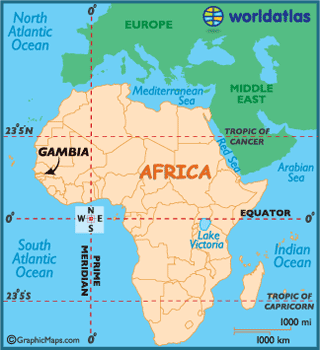
I think it’s high time that I write some introductory information about The Gambia, so that you all have a bit of a better idea as to what life is like out here. According to the United Nations:

The Gambia is ranked 151 out of 169 countries on the Human Development Index


The average per capita income over a year is approximately $400 (about £250).

Poverty is increasing – in 2003 59% were classed as “poor”, living on less than $1 a day. Now 61% live on less than $1 a day.

The mean length of schooling stands at 2.8 years.

25% of women are literate, compared to 48% of men.

65% of the population have access to safe water.

Youth (0-25 years old) makes up approximately 60% of the population. 40% of the youth of working age are unemployed.


As one can see, The Gambia faces many challenges. There is a lot of work to be done to help ensure that Gambians have the same life opportunities and access to education that other nations enjoy. Organisations such as the World Bank and the International Monetary Fund have been active in The Gambia for many years, but as one can see the levels of poverty have actually increased under their watch. Policies, such as the setting of a 24% interest rate (as stipulated by the World Bank), have often been seen as misguided, leading to calls from development charities for a re-think.

So what else for this week’s blog entry?

National Volunteering Network – whilst my work is primarily with the Ministry of Education, I’m also starting to become involved with Gambia’s national volunteering network (something I should be able to contribute to, having worked with a similar kind of network in Mongolia). The Network is in its infancy, but is hoping to do a variety of things to promote volunteerism in Gambia. The Red Cross, the UN and some small Gambian organisations are aiming to jointly organise an event for International Volunteers’ Day on December the 5th. Watch this space...

Blackout at the Office - I guess the main thing that characterised this week for me was the five day power cut that we faced in my workplace. As a result, pretty much all work stopped in my department (the work of about 30 people). I do not feel like I should discuss the details of exactly why we’ve had a lack of electricity over the internet, but anyway – this is a good example of some of the problems that a developing country faces. It’s frustrating, but also a good educational experience for me. I just hope that power is back in time for next Monday!

Lots of love and a big hug to you all, take care and have a good week ahead,

Robert

Monday, October 10, 2011

Football's Coming Home


On Saturday I had the pleasure of going to see Gambia take on the mighty Burkina Faso in the national stadium. I live relatively close to the stadium, so I was glad to finally have the chance to step inside and see a match. True to form, we were treated to a football match “Gambian style” – no pies and hot dogs here! Instead women and children walked around the stands with oranges and groundnuts, doing their best to make a few extra Dalasis. As Gambia is a predominantly Muslim country many supporters got their prayer mats out during the first half to say their five o’clock prayers. It was a strange but equally heart-warming sight to see supporters praying whilst the players on the pitch continued playing. The more fervent fans (football-wise) waited until half-time to pray though.

The game itself was quite fun. It was an international match so there was a bit more pomp and ceremony; we were treated to the national anthems at the start. Tiny Gambia almost sprang a shock, scoring in the 50th minute with a headed goal. However, party poopers Burkina got a last-minute equaliser to deny the “Black Scorpions” a famous scalp. Gambia’s Belgian coach Paul Pot should be pleased with the performance though. Fingers crossed it will be enough to help him temporarily forget the cruel joke his parents played when naming him.

Daytrip to Banjul – As some of you may know, Banjul is the capital of The Gambia. However, due to Banjul’s small size (it’s basically an island) all the administration buildings, tourist facilities, shops and workers’ houses that you would normally associate with a capital city have spread out to the surrounding area, commonly known as the Kombos.  Up to this point I had yet to set foot in Banjul itself – high time to correct this!

Banjul is usually a buzz of activity, a complete nightmare to get around. Thus, I decided to visit on a Sunday, when things were a lot quieter. The first thing one notices are the quality of the roads. Everything is nice and smooth, very few potholes. The President and dignitaries are ensured a comfortable journey to and from the parliament building. Upon arrival one is greeted by Arch 22, a large monument commemorating the coup which overthrew the previous regime on the 22nd of July, 1994.

Aside from all the government buildings Banjul has a relatively busy port, transporting goods to and from The Gambia. The port is also home to a transporter ferry, taking people across the River Gambia. This ferry is a must for the Senegalese traders, anxious to take a short cut when transporting things from one side of their own country to the other (the “hot dog sausage” of Gambia separates the North of Senegal from the South). Traders rush to be the first in the queue each morning – a wise idea as latecomers have been known to wait around for 10/12 hours...

It was nice to see a bit of Banjul, but I’m pleased that I don’t work there myself. The journey to and from the capital is quite long and tiring during the rush hour and it can probably be quite a hectic and stressful place at times. I’m happy enough as it is in the Kombos, away from all the crowds...

Family Trees – After several weeks of being confused when people mentioned they had 16 brothers, 18 sisters and 3 mothers I decided to get to the bottom of this mystery. My Wollof language teacher kindly obliged, and as such I am now in the possession of a clear diagram explaining all (please feel free to click on the photograph to the right).
The traditional family unit in The Gambia is worthy of a lesson in its own right. Most striking of all is the potential pool of wives that a son in a family has. Traditionally he would be expected to marry either one of his father’s sister’s children or his mother’s brother’s children. I don’t think my cousins Tiffany and Genevieve would be too impressed with this system, and as they are both “tradition traitors” (they’re already married) I’m in a tricky situation. The children of my mother’s sister and father’s brother are all no go areas, being considered “brothers” and “sisters”, so that’s another avenue closed off. Hmph!
The issue of having numerous “mothers” and “fathers” also arises. Polygamy plays its part in this, as does the traditional Muslim rule that when a husband dies the brother of the deceased should take care of the now widowed wife. These factors, combined with the fact that brothers and sisters help bring up all the children in the extended family, mean that one’s father’s brother is often referred to as a “father” too, and that your mother’s sister is another “mother” to you. Confusingly, aunties and uncles still exist, but only your mother’s brothers and father’s sisters qualify. Got all of that?!

Ok, fingers crossed some of that is of interest to you. Have a great rest of the week, many best wishes and take care of yourselves,
Robert

Monday, October 3, 2011

Dinner by Candlelight anyone?

The last week has been punctuated by many power cuts. Every single one of the last seven evenings I’ve been treated to a clear view of the stars, as all the artificial, electric lights in the neighbourhood have been off. It’s quite surreal to have complete darkness in the middle of a city. I took a walk around my local streets and could see little candle lights through people’s windows, it's really quite beautiful. My own home is awash with candles at the moment, I’m trying my best to create a nice atmosphere in the evenings. It all feels quite romantic - that is until I spot the lizard that’s sat next to me...

Power cuts are a common feature out here in the Gambia, and a good way of seeing the poverty divide. Anyone who can afford it buys a back-up electricity generator that runs on petrol, so for them the impact of power cuts is minimal – one just takes a short walk to the generator, flicks a switch and normal service resumes. For the rest of us plebs (myself and 95% of the population) we are faced with regular power cuts at work and at home. I quite enjoy evenings by candlelight, but I’m sure the locals would prefer something a little bit more reliable...

My work - So, what exactly am I supposed to be doing here? Well, my job is to help the Ministry of Education with a project that uses national (Gambian) volunteers to fill gaps in secondary schools. The Ministry recruits newly trained graduates and places them in rural schools for an academic year. Rural schools are in particular need of help as they are understaffed. Going to a rural location often entails a drop in living standards (some locations still don’t have electricity or running water) and the distance from friends and family can be tough, thus it is not a popular choice for teachers. Having said that, the Ministry allocates all teachers to schools every three years, so teachers often have no choice where they go! In theory this may sound like a good solution to addressing the teaching gap in the countryside. In reality, however, as soon as teachers find out they are going to a rural school many of them quit their job!

So if going to the countryside is such a tough option why are these young volunteers interested? Well, many of them seem keen to give something back to the nation. Some feel that they are the privileged few, those who managed to get to university. Thus they are keen to give one year of their lives back to The Gambia in order to help other young people get access the same levels of education. Two of the volunteers have separately quoted John F. Kennedy's words “ask not what your country can do for you, but what you can do for your country” back to me. Other volunteers are keen to see what life is like in the countryside, having spent their whole lives growing up in the more developed Kombos.

The idea of the project is very good, and the work we’re doing should prove useful as other organisations and government departments gradually start to use national volunteerism in their work. However, it is clear that this work will be difficult for me! Things move frustratingly slowly here... Fingers crossed I’ll be able to overcome this, and the other challenges that may present themselves, so as to make a difference. Wish me luck!

Local music – whilst not necessarily my “cup of tea”, Gambians seem to be very much into reggae, hip hop and Senegalese music. This is the soundtrack to my minibus journeys around the city; every taxi driver seems to let the day pass him by with large doses of reggae beats. One day at work I decided to check exactly how popular Western music was, and asked how many people knew The Beatles. Nobody. Elvis Presley? Nope. It never ceases to astound me how in some part of the world The Beatles are so ingrained into musical culture (e.g. in Mongolia they were massive – Ulaanbaatar has a monument dedicated to them), whereas in other they are completely unknown. Bizarrely enough, my office all seemed to know the obscure 90s pop sensation Whigfield though...

A big hug and lots of love from The Gambia, take care of yourself,

Robert

Monday, September 26, 2011

Tea time

On pretty much every street corner of the Kombos one can find a group of guys sitting around, relaxing and letting the day pass them by. If you’re lucky enough to befriend a few of them you can join in the regular ritual of ataya drinking – the local version of green tea. The locals use strong, affordable Chinese tea and then put in the pot about 5-6 spoons of sugar for each person drinking. The whole tea making/drinking process is, as you would expect from people with time on their hands, very drawn out. The tea is brewed about three or four times, and is then passed from glass to glass a couple more times (as is illustrated in the photo above). This creates a “bubbly effect”, which I’m told greatly enhances the flavour. The result is extremely tasty and certainly has an energy-giving kick. Another type of tea to add to my repertoire methinks!

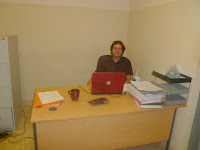
Beginning at Work - I've just had my first couple of days at my new workplace, the Ministry of Education. First impressions are that I should have everything I need to be comfortable in my workplace – we have fans and internet (when the electricity is on), so relatively speaking I've done very well! On my first day I was taken around to meet all the staff and all the departments. I’m in a massive complex, so remembering everyone’s name will be a challenge (but very much expected! People look very disappointed if you forget, and will often get straight to the point – “hi Robert, do you remember my name?”). My new neighbours include the heads of curriculum for all the subjects in Gambia, so I have the pleasure of break time tests of my French language with the nationwide head of French! I hope to find out more about other intriguing departments such as Islamic Studies and Disability/Special Needs in the coming weeks. I’ll tell you more about my own particular role amongst all of this in the next blog post.

Set Setal – otherwise know as National Clean-Up Day [insert fanfare]. Yes, every last Saturday of the month, by order of the government, a full morning is dedicated to the clean-up of one’s house and neighbourhood. All the shops are closed and the roads can only be used by people with special permission. The result was an eerily quiet city centre, with all roads deserted and all shops boarded up. Everyone was indeed at home cleaning their compounds. Even the police, army and prison service got in on the act, cleaning up the highways of the city. In some ways Set Setal seems like a great initiative, forcing everyone to care for their neighbourhoods. I wonder how this would go down in other countries...

The Wedding Dancers – after doing my own bit of cleaning I was fortunate enough to be invited to a bride’s wedding celebration by a local Senegalese family. As the weather was positively stormy we all crowded into a small house for what turned out to be an evening of music and dance. Drummers drummed and the obligatory whistle-blowers whistled. It was an explosion of noise, which seemed to go on non-stop. A brief lull occurred when the bride entered the middle of the room – all the guests would come up and offer her money.

The rest of the evening revolved around people taking turns going into the middle of the room to dance. The dance was mainly done individually, and involved a variety of short movements. Of course yours truly was dragged in on the act, much to the amusement of everyone present, including one of the cleaners from work – much hilarity was had in the office the following Monday. I think my mix of Polish folk dancing and the African beat worked relatively well... The event was attended mostly by women (the bride’s family and friends), all dressed in their finest dresses. When dancing they produced a beautiful cocktail of swirling colours. After several hours we returned home, an evening well spent.

Lots of love from the fresh and newly cleaned capital of Gambia. A big hug to you all,

Robert

Monday, September 19, 2011

Lightning Strikes

We’re currently in the tail-end of the rainy season, and are getting treated to some really great light shows in the evenings. My compound has a roof terrace, so I’ve got a fantastic place to view the sky being lit up. I’ve never seen anything like it – there are strikes of lightning every 10-15 seconds, and from all directions. It really is impressive, I think I’ll be quite sad when the rain stops and we’ll just have normal skies! So, whilst I’ve been staring at the sky what has been on my mind?

Mr President – Otherwise known as President Jammeh (or his full title, His Excellency Sheikh Professor Alhaji Dr. Yahya Abdul-Azziz Jemus Junkung Jammeh Naasiru Dee). The President came to power after a coup in 1994, and now exerts great influence over most of Gambian life. His face is everywhere – on billboards, houses, bakeries(!) and on the television. Just recently I saw him cleansing people of evil spirits, and offering women fertility treatment – his power seemingly spreads into the spiritual sphere as well.

To find out more about President Jammeh have a quick look at http://en.wikipedia.org/wiki/Yahya_Jammeh. An interesting character I’m sure you’ll agree.

The Bumsters – a foreigner’s life in the Gambia is invariably touched at moments by the “bumsters”. Bumsters are Gambian men who use a variety of tactics to try to get money or assistance from foreigners. They mainly can be found on the beaches or the touristy areas of the city, and spend the whole day on the lookout for foreigners. Once one is in their sight they’ll start a friendly conversation, and will follow you for miles upon miles until either a). you’ve given them money or b). you’ve made it completely clear that you’re not interested in funding their education/hiring them as a guide (this may take several attempts!).

Bumsters are particularly keen to target women. Gambia is one of the centres for male prostitution in the world, with many Western middle-aged women coming over for a bit of fun with the young, muscular local men. The arrangement seems to work along the lines that the women enjoy the attention and the men receive money and sometimes even the chance to start a new life in the West. However, the nature of this arrangement is such that usually there are very unequal power relations between the couple. Various organisations in the Gambia are trying to clamp down on the practice of male prostitution, but it obviously is still a popular career option for some young men.

Whilst many bumsters can just be harmless, simply trying to earn a bit of money by offering help and “services” to tourists, the hardcore group can really be quite cunning and trick even some of the more experienced expats out here. They try to convince you that you know them from somewhere, often by quoting names of people they have researched that work at your workplace / live in your area. Then they invite you to an event, say for example a naming ceremony of a child. The child is often not even their own child, but they will still aim to guilt-trip you into buying gifts/baby milk powder for the family. These gifts are then either taken by the bumster or sold on at a later time. The whole thing is a scam.

I had my first real bumster test today – a man came up to me and said “Hey! It’s Lamin, don’t you remember me? I work as a guard at your house” (a tactic used to make the target feel guilty for not remembering people’s faces). I replied politely, “sorry, I don’t know you. Do you know my name?”. Undeterred, Lamin answered “It’s John”. Perhaps foolishly I continued to converse: “No it’s not”, to which Lamin said “oh, but I am a guard at your house. I know Julie” (random Western name dropping seems to help). “Where is my house then?”, replies the now less polite and slightly cocky Rob. “Just next to the junction over there”. A nice try, but I actually live about a 20-minute drive from that area. Many people have fallen for the tricks that people like Lamin use. It’s a shame but one has to be on one’s guard when meeting overly friendly strangers in the more touristy parts of the city. Thankfully, the vast majority of Gambians are not like Lamin, and are some of the most genuinely friendly people I have met.

As I finish this blog entry a man has just got his prayer mat out next to me to begin his afternoon prayers. A nice reminder of the importance of Islam to the majority of people here (roughly 90% of Gambians are practicing Muslims). I'll write about how this impacts upon the culture and daily life sometime in the coming weeks. Polygamy is worthy of a couple of paragraphs at the very least! For now though, take care of yourselves and lots of love,

Robert

Thursday, September 15, 2011

Village People

Last weekend we were all taken to the village of Ndemban, about a one hour drive from our base. I was keen to see more of rural, traditional Gambian culture, having spent the last week and a half in the relatively modern surroundings of The Kombos (the capital and its surrounding area). As soon as we arrived and saw our greeting party of the all-singing-all-dancing village women I knew that it would be an experience not to forget!

Ndemban – the first thing that struck me was just how tightly knit the people were in the village. Everyone was mingling in the village square, under the shadowy protection of large trees. Groups of children were running around playing games with each other, the women were talking and doing the cooking and washing together, whilst the men sat around in big circles (no doubt discussing the day’s news). Everyone seemingly wanted to be social and just mingle with each other. The other thing that hit me was the beautiful nature – the plants, animals and rivers were beautiful. Mango trees and brightly coloured lizards are completely new things for me, it’s all very beautiful.

The Day’s Entertainers – Ndemban’s Women’s Band, a really energetic and cheerful bunch! The older generation of women in the village had formed a large dance troupe, which filled the whole of the surrounding area with noise and singing. They seemed to have a repertoire of hundreds of songs, many of which I was told were simply made up on the spot (one person would start singing and then the others would soon follow). Most of the songs were patriotic, focusing on the beauty of Gambia or the greatness of its president.

The dancers were dancing to the sound of what I can only describe as a violin-drum gourd, which was played with enthusiasm by multiple musicians. It was lovely to see a multi-person instrument, carried by one person but played by a group of three or four. All the dancers eventually got in the act, having turns to drum or play the strings.

Village elders – The visit to Ndemban also allowed us to see an example of how a typical Gambian village is organised. We got introduced to the Council of Elders, a group of men who form a sort of “panel of wisdom” / decision-making body. The men are selected due to reaching a certain age or status, and serve on this panel for life. Women are invited to work with the elders when the issue is of particular relevance to them, for example policies around children and their upbringing. It was interesting to see the respect and power that certain old men held here – a complete difference from the Western view that old people are “past it”.

The Sacred Forest – There was one part of the village which was even off limits to the all powerful village elders, the forest of “Beeraiye”. Beeraiye is the place where girls are initiated into womanhood. They are taken here for a stay in exclusion for up to one month. At the end of this period they return to the village, ready to be married. Groups of their would-be husbands gather and shower them with gifts, and the lucky ones go home with a bride.

During the time in Beeraiye the girls are given advice and training on how to be a good wife by older women. The darker side of this tradition is the issue of female genital mutilation, still a common practice in Gambia. Many women in the countryside still face the prospect of this often dangerous and harmful practice. Whilst I’m doing my best not to judge the situation (I’ve only been here two weeks), when you hear the views of some men on the subject it’s difficult not to condemn the practice. As one male villager candidly told me, “if we didn’t do this then our wives would always be cheating on us”. A high price to pay for marital fidelity...

Going home – before we left the village we were all made honorary members of the community. Whilst it might sound cheesy/touristy, I felt it was a genuinely friendly and kind gesture. I hope I will have the chance to return to Ndemban and visit the few friends that I made during my time there. In some ways it is sad to return to the relative comfort of the big city, life in the countryside seems to be a lot more colourful and traditionally “Gambian”. Hopefully I’ll have the chance for lots more countryside visits soon!

Please feel very welcome to see more photos of my trip to Ndemban at: https://picasaweb.google.com/schliner/VisitToNdemban I hope you like them!

Lots of love and best wishes,

Robert

Sunday, September 11, 2011

Settling in


So, I survived my first full week in The Gambia! I’m halfway through my training period and will be starting my job on Monday the 19th. So, what have I been up to this week?

The big move – On Wednesday I moved out of the very nice surroundings of the hotel to my permanent abode. With trepidation I boarded the truck to set out into the great unknown. After a short drive I arrived at a small compound, which I will now be calling “home”. My flat is very nice, spacious and with electricity points in all the rooms. Most importantly all the windows have mosquito nets across them, so I’m in (relative) heaven! I share my compound with three other families, who so far seem friendly and welcoming. Yesterday I had my first “food bowl” experience with them, in which we all gathered around one shared bowl of rice and ate the contents together. No big cultural errors made so far! My general neighbourhood is quite nice too, I've got all basic shops I need and am relatively close to the centre of the city. The cherry on top of the cake is that two other VSO volunteers are close by too, so no doubt lots of consoling chats and cups of tea await...

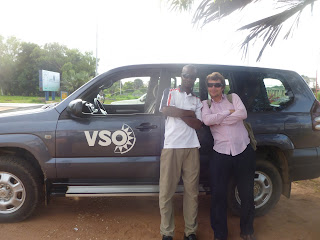
Training – Our induction training has so far been jam-packed, we’ve had a lot of information/trips in quite a short time. So far we’ve looked at the politics in the region, the health issues, the issues surrounding education and disability in The Gambia, the past and present situation of international development aid to Gambia and VSO’s role here (VSO has worked in The Gambia since 1961!). Fear not, I’ll write in more depth on these subjects in the coming weeks. We’ve also has visits to the local health clinic, a bank (to get a local bank account set up) and the local police station – I now officially have “legal alien” status. Yes, as Sting and The Police once sang, #I’m an Englishman in Banjul#. We also had a visit to the British High Commission. Just as in Mongolia they have a bar inside their grounds – just in case the local supply of gin and tonic runs out.

We've also had some basic survival training, which whilst might be useful to some people seems a bit patronising to me! The high/lowlight of this was being taught how to safely light a gas stove... Obviously our Gambian colleagues have come across some foreign volunteers who really don't have a clue of how to live outside of the comfort of the Western World (or have simply never gone camping!). The rest of my week has been spent in:

Language classes – Gambia has many local dialects, and whilst English is the official language it’s important to speak a bit of the local languages in order to:

a). speak to the lesser educated people who don’t speak English

b). show that you’re making an effort (people seem to really appreciate when a foreigner speaks a bit of the local lingo)

c). show that you’re not a tourist (so I can stop people trying to constantly overcharge me!).

I’ve started learning Wollof, the local language here in the West of Gambia. Wollof has been influenced a bit by French, and is spoken both in Gambia and in much of neighbouring Senegal. The first thing that struck me about our Wollof lessons is that we have spent the last 5 days solely learning greetings. No “where do you come from?” or “how old are you?”, but rather “how’s your body?”, “my body’s in peace”. This question then seemingly has to be followed by “How’s your family?”, to which the response is “my family’s in peace”. This greeting ritual goes on for about 4 or 5 questions (“did you sleep well?”, “how’s the afternoon?”), and is genuinely practiced by all the Gambians I have met. Once the greetings are out of the way you can get down to business, but it’s seen as very impolite to get straight to the point!

As a person who doesn’t care much for the greetings we use in the UK (“how are you?” to which the person responds “I’m fine”, without either person really caring too much about how the other person actually is), I initially rebelled against this greetings culture. However, I quickly saw just how important it is to people here – it’s seemingly a way for people to acknowledge each other as an individual human being who demands respect, rather than just an object that you use to achieve your own personal goals. I’ve been told that Gambians find foreigners who simply go into a shop and ask the shop assistant for a drink quite rude – they’re not respecting the local custom / they’re not playing the game!

That’s it for now, but I’ll write another entry in the next few days – I’m going off to visit a local village community soon, I’m sure that will be of interest. Lots of love and a big hug, I hope that you’re all “in peace”,

Robert